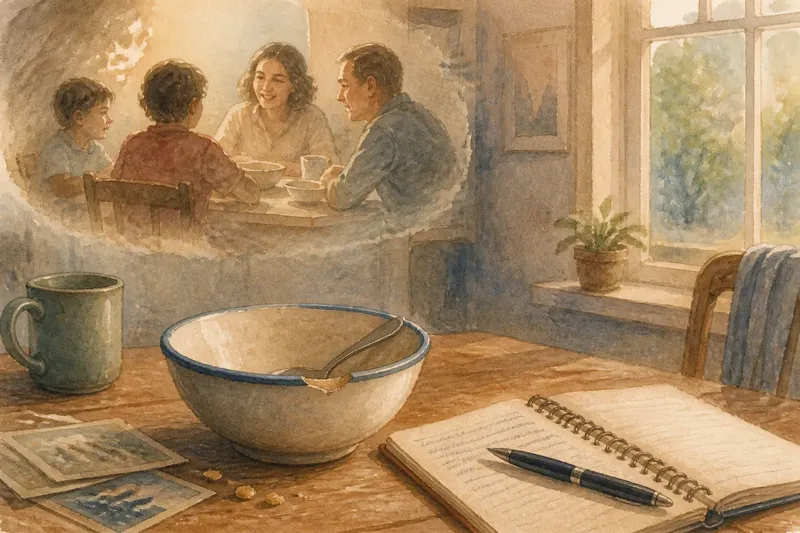
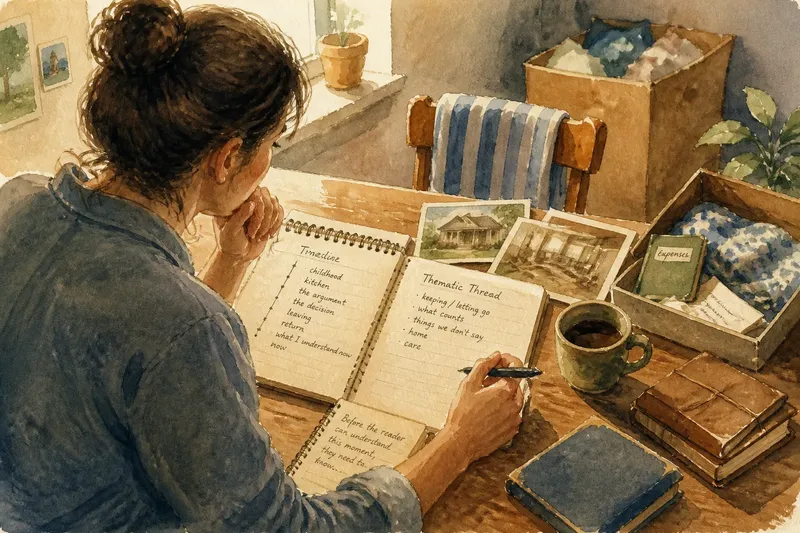
Before Memoir Had a Name: The Many Forms of Personal Record
Personal records preserve experience in distinct forms, from private diaries to letters written for a reader, helping you choose what to share and how.
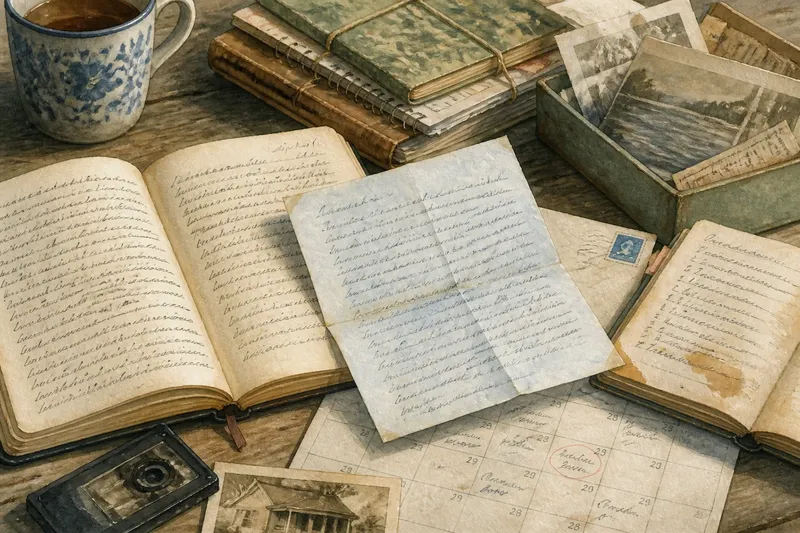
A diary entry tucked into a kitchen drawer may describe the same afternoon as a letter sent across an ocean, yet the two records do different work. The diary can hold a thought before it is settled; the letter must make that thought legible to someone else. Personal records are not simply raw material waiting to become memoir. Their original forms shape what they preserve, what they leave out and how a later writer can share them.
To work with such records thoughtfully, begin by asking what each form was made to do. A diary, letter, commonplace book, scrapbook or recorded recollection carries a different relationship to time and audience. That relationship remains part of the material, even when the record later enters a personal narrative.
Each record begins with a different audience
The most useful distinction is often not the medium but the intended reader. A private diary may address its writer alone, or an imagined future self. A letter addresses a particular person, even if that person never replies. A family recipe book may be organized for whoever cooks next, while a notebook of observations might serve its keeper’s memory rather than any reader at all.
Audience affects what a record explains. In a letter, a writer may spend several lines recounting news the recipient already knows because the exchange itself matters. A diary can skip the same context entirely, relying on a shorthand that made sense at the moment. Later, those gaps can be revealing, but they are not invitations to invent missing facts.
One analogy may help: records are like containers with different openings. A letter is shaped to be passed from hand to hand; a diary may open only for its keeper. The contents can overlap, but the opening changes what enters and how it is presented.
Diaries keep company with the unfinished self
A diary often records experience close to its occurrence, though not necessarily in a complete or neutral way. The writer may be tired, angry, bored, or eager to impress an imagined reader. A short entry can preserve the intensity of a day while saying little about what preceded it. Its gaps and abruptness belong to the form.
That immediacy can make a diary valuable for memoir, but it does not make the entry a final account. A writer’s interpretation may change; a later memory may supply context that the page lacks. Treat both versions as evidence of different moments: what the person believed then and what the person understands now.
When adapting a diary passage, keep its original limits visible in your own thinking. If an entry says that a conversation felt humiliating, it records that feeling; it does not establish every other person’s motives. You can narrate the remembered feeling directly while separating it from what you cannot know.
Letters are shaped by relationship and response
A letter is not merely a diary entry with an address. Its writer chooses what to tell a particular recipient, which details to explain, and what tone might preserve or alter the relationship. A letter can reassure, persuade, flirt, complain, negotiate, or maintain ordinary contact. Its silences may reflect courtesy, privacy, fear, or simply the limits of the page.
Letters also belong to an exchange, even when only one side survives. The writer may be answering a question absent from the archive, avoiding a subject both people know, or repeating news that makes sense only within that relationship. A memoirist who quotes a letter should avoid making it sound like a complete transcript of the past.
Consider an invented situation: Say Mara finds a letter her younger self sent to an aunt after moving to a new town. The letter describes the bus route and praises the aunt’s advice, but says nothing about homesickness. If Mara later remembers crying at the bus stop, she can present the letter as the account she offered her aunt and the remembered tears as a separate piece of knowledge, rather than silently inserting them into the letter.
Other records preserve activity, not a single voice
Personal records extend beyond diaries and correspondence. A calendar marks appointments and absences; a recipe notebook gathers changes made in a kitchen; a scrapbook places photographs beside captions, ticket stubs, or clipped notices. Each form organizes experience around a task. The calendar may show when people met, but not what they said. A recipe can preserve a family’s habits through substitutions and marginal notes without explaining why a dish mattered.
Audio recordings, home videos, and voice messages add tone, gesture, and sound, but they too are selective. A camera points somewhere and not elsewhere. A person speaking into a recorder may perform for the device, address a future listener, or talk without imagining anyone beyond the room. The record captures an occasion, not the whole life around it.
These materials become more useful when their ordinary purpose is respected. A stained recipe card may support a scene about cooking together, but the stain alone cannot establish who made the mark or when. A date written beside an appointment can orient a narrative, while the reason for the appointment may remain unknown.
How should personal records enter a memoir?
Should I quote a diary exactly?
Quote the wording when its phrasing matters, and make clear that it comes from a diary entry. If you shorten it, preserve the sense and mark any omission in a way your format allows; do not smooth an awkward sentence into words the writer never used.
Can a letter stand in for a whole relationship?
No single letter can carry the entire relationship by itself. Introduce the recipient and the occasion as far as you can establish them, then let the letter represent that exchange rather than every feeling shared between the two people.
What if a record conflicts with my memory?
Keep the disagreement visible instead of forcing a tidy verdict. You might describe what the record says, what you recall, and what remains uncertain, distinguishing each source in the prose.
May I include another person’s private words?
Consider the person’s privacy, the sensitivity of the material, and the purpose of including it. If the decision has legal or serious ethical implications, seek qualified advice rather than relying on a general rule.
Preserving the source preserves its limits
When working from family papers, make a clear distinction between the original record and your later account. Keep a note of where an item came from, who appears to have written it, and whether you are quoting, paraphrasing, or drawing an inference. A folder label or a simple source note can prevent a remembered detail from gradually being mistaken for a documented one.
Where the right to reproduce an item or the rules for handling it depend on ownership, permission, local law, or the item’s condition, consult the relevant owner, conservator, or qualified professional. For ordinary writing, a careful description may serve better than displaying a full private document. The decision should fit the story’s purpose, not the appeal of revealing something merely because it survives.
In revision, check whether each record is doing a distinct job. A diary might show the judgment you made at the time; a letter might reveal how you presented yourself to someone you loved; a calendar might establish the sequence without supplying emotion. If several records all repeat the same information, choose the one that most clearly serves the passage and let the others remain part of your background knowledge.
The form remains part of the story
A personal record can be both a source of information and an action taken in a particular relationship. Writing a letter meant reaching someone; keeping a diary meant returning to a private page; saving a recipe meant making a practice available again. Those purposes lend records meaning beyond their sentences, while still leaving room for uncertainty about what they cannot tell us.
Before quoting or adapting an old record, ask what kind of attention it originally invited: a private return, a reply, a practical use, or a future recollection. That question helps a memoir honor the record’s limits and use its form as part of the telling. Personal records are most revealing when they are allowed to remain unlike one another.