A Timeline or a Thematic Thread for Your First Draft?
Choose a timeline or thematic thread for your first draft by testing what readers need first, then build a clear route through the scenes you remember.
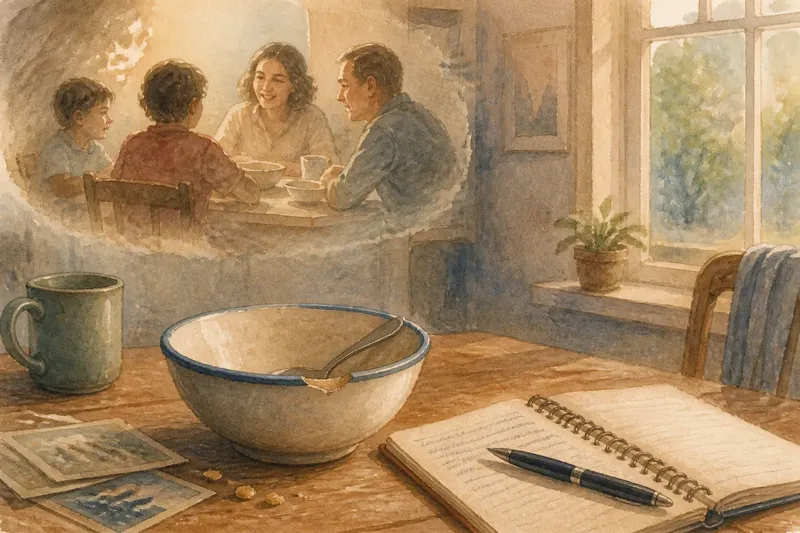
You sit down to write about the afternoon your family left its old house, but the memory keeps reaching beyond that day: your mother labeling boxes, an argument over what to keep, a later visit to the empty rooms. Choosing a timeline or thematic thread for your first draft means deciding what a reader needs to understand first.
Chronology follows events in the order they happened. A thematic structure gathers scenes around a recurring concern, such as keeping, leaving, or family silence. Neither is inherently more honest or more literary; each directs attention differently. A short week of exploratory writing can help you hear which route the material supports.
Begin with the reader’s first question
Before arranging scenes, write down the question a reader is likely to have after the opening. If the story begins with a decision, the reader may need to know what led to it. If it opens with a striking consequence, the reader may first need to understand what that consequence means to the narrator.
Complete this sentence: “Before the reader can understand this moment, they need to know…” An answer like “what happened next” points toward a timeline; “why this object keeps returning” may point toward a theme. Sometimes both matter, but one usually needs to lead.
Use that question to separate necessary context from information that matters mainly to you. A memory can be vivid without belonging near the beginning. The draft does not need to reproduce every association in the order it comes to mind; it needs to give the reader a path through the experience.
Map events before shaping scenes
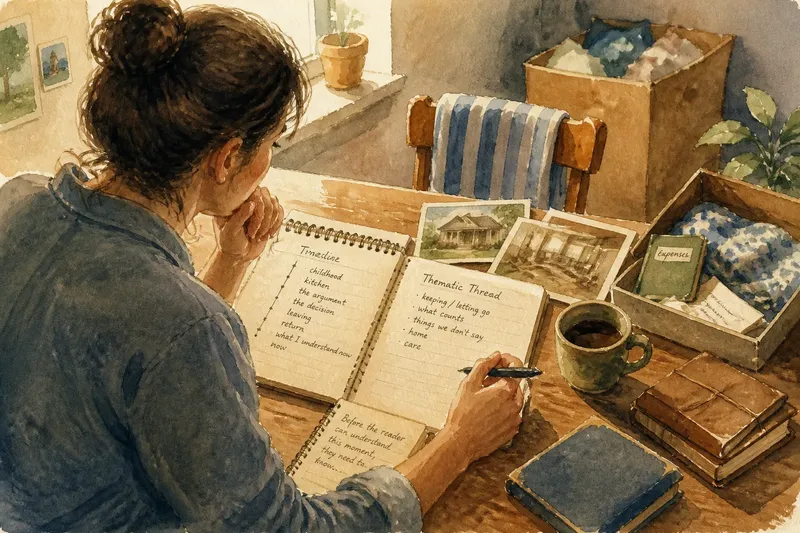
On the first writing day, make a loose event list rather than drafting polished scenes. Note the moments you remember, transitions between them, and later events that change how you understand an earlier one. Keep entries brief enough to see the whole span at once.
Mark gaps honestly. “I remember the kitchen, then the car” is more useful than inventing a smooth passage between them. Later, decide whether the missing interval needs explanation, can remain a gap, or should be described as uncertain memory.
Beside each event, note the reader’s likely question. A departure scene might raise the question of what prompted it; a later return might clarify what the departure meant. This does not commit you to chronology. It shows which scenes carry context and which carry interpretation.
Find the thread that changes across scenes
On the second day, look for ideas, objects, or tensions that recur. A family’s changing meaning of “home,” a repeated act of packing, or the difference between what people said and what they avoided saying could become a thematic thread. Keep it grounded in scenes rather than turning it into an abstract lesson.
Choose one possible thread and gather the scenes that touch it, even if they occurred years apart. Beside each scene, write what changes: the narrator’s understanding, another person’s behavior, or the meaning of a familiar object. If nothing changes, the thread may be too broad or the scenes may not belong together.
Imagine you are writing about a relative who kept a small notebook of household expenses. You list the first time you noticed it, a later argument about a purchase, and the day you found it after the relative moved away. If readers first need to understand how the notebook became a family presence, a chronological opening may help. If the story is chiefly about how care was expressed through accounting, grouping the scenes around that meaning may give the draft a clearer center.
Test two openings before choosing
On the third day, write two short openings from the same material. In one, begin with the earliest scene that gives readers necessary context. In the other, begin with a later scene that embodies the central tension, then pause before explaining the past. Treat these as trials, not promises about the finished structure.
After each opening, ask what a reader can infer and what remains confusing. A chronological opening can feel steady but delay the central pressure. A thematic opening can create focus quickly but may need careful transitions so readers know when each scene occurs.
Read both aloud. Listen for places where you explain what a scene already makes clear, and where a jump in time leaves an essential question unanswered. The stronger opening is the one that gives readers enough footing to care about what comes next, not necessarily the more dramatic one.
Compare the routes through the material
On the fourth day, make a two-column plan. In the timeline column, place scenes in the order they happened and note where interpretation enters. In the thematic column, group scenes by the recurring question and mark each time shift. A timeline is like a row of labeled drawers; a theme is a thread connecting selected drawers that would otherwise stay apart.
For each plan, consider the following decisions:
- Check whether the order makes the cause of a consequential decision understandable; if it does, keep that sequence, but if it does not, move the scene that supplies the cause earlier.
- Check whether the central tension appears soon enough; if it does, retain the opening, but if it arrives late, try beginning with a scene that embodies it.
- Check whether every time jump has a clear marker such as “years later” or “that winter”; if it does, leave the cue, but if it does not, add one or place the scenes in chronological order.
- Check whether each thematic scene changes the reader’s understanding; if it does, keep the grouping, but if it only repeats a point, cut or replace that scene.
- Check whether chronology preserves momentum; if it does, follow the timeline, but if several scenes feel like an event list, group some around a recurring concern.
These checks are not a scoring system. If one plan answers readers’ first questions with less explanation, that is a useful sign. If each plan solves one problem and creates another, try a mostly chronological draft with a brief opening from a later moment, or a thematic sequence with clear time cues.
Choose a working route and draft its links
On the fifth day, choose the arrangement that best supports the reader’s first understanding and write a one-page route through the draft. For each scene, note its place, what the reader learns, and why it belongs there. Keep the plan focused on movement rather than summarizing every detail.
Say your timeline feels clearer but emotionally flat, while your thematic plan feels vivid but difficult to follow. Use the timeline as the working route, then bring in the recurring object where its meaning changes; if the time shifts still confuse a reader, add plain cues such as “the following winter.” The resulting choice preserves chronological clarity while letting the notebook’s changing significance shape the draft.
On the sixth day, draft transitions between scenes. In a timeline, a transition can show elapsed time, a changed circumstance, or the step leading to the next event. In a theme-led draft, it needs to signal both the time shift and the relationship between scenes; a shared idea alone may not tell readers when a memory took place.
On the seventh day, read the draft in the order a reader will encounter it. At each opening, ask what the reader needs to know then. At each transition, ask whether the next scene feels connected or merely adjacent. If you revise the order, note what the new placement is meant to clarify.
Which structure fits the reader’s first questions?
When should I choose chronological structure?
Choose chronology when understanding depends on how one event led to another, or when the narrator’s perspective changes over time. It gives readers a clear route through cause, consequence, and later recognition.
When does a thematic structure work better?
Use a theme-led structure when scenes from different periods gain meaning through comparison, and the recurring concern matters more than a continuous sequence. Make time shifts clear so the pattern does not become disorienting.
Can a first draft combine both structures?
Yes. You can open with a later scene, move back to the events that explain it, then organize the rest mostly by time or theme. The choice should clarify the reader’s path rather than display structural cleverness.
What if I cannot tell which structure is right?
Draft a brief version of each opening and compare the questions each leaves unanswered. If the difference remains unclear, choose the simpler route for now and note what the alternative might reveal.
A timeline or thematic thread for your first draft is a decision about sequence and attention, not a verdict on what kind of writer you are. Let the reader’s first need guide the arrangement, then let revision respond to what the scenes reveal. A clear time cue or a well-placed recurring object can do quiet work: it helps readers follow the memory while leaving its complexity intact.